






Why Knee Pain Is More Common in Women, and What You Can Do About It
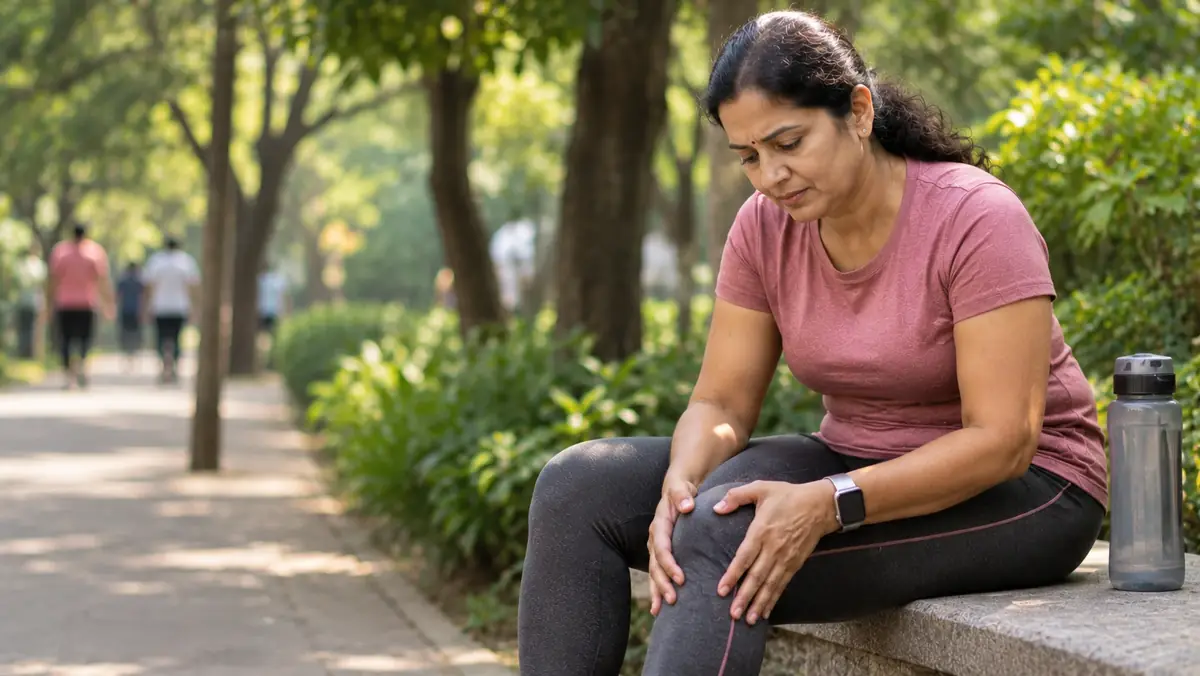
A lot of the calls I take about a woman’s knee pain don’t come from the woman herself. They come from a son working in another city, or a daughter living abroad. “Mummy won’t say anything, but I can see she’s struggling on the stairs.” “She’s been taking painkillers for two years and thinks it’s normal at her age.”
When I do speak to the women themselves, many have quietly built their whole day around their knees. They’ve stopped sitting on the floor. They plan outings to avoid stairs. They’ve been “managing” for years, and some of them apologise for “troubling” us when they finally call.
This article is for those women, and for the families worried about them. Knee pain really is more common in women. It’s not in your head, and it’s not something you just have to live with.
What the research shows
Indian and global analyses consistently find higher knee osteoarthritis (OA) prevalence, incidence and disease burden in women [1][2]. A review of Indian studies on gender differences in knee OA found higher prevalence and incidence in women across several studies, and noted the same pattern in developed countries [2]. Knee OA is also described as a major cause of mobility problems, particularly among women [3].
Why might women be affected more?
Researchers have proposed several reasons. Not all of them are fully proven, and the exact picture is still being studied.
- Hormonal changes. OA becomes more common around and after menopause, which has led researchers to study the role of hormones. The exact mechanism is still under investigation.
- Body structure. Differences in knee and hip alignment, and in how loose the ligaments are, may change how load passes through the knee.
- Muscle strength. Weak thigh muscles are a risk factor for knee OA, and strength often drops with age and inactivity.
- Body weight. Obesity is a major changeable risk factor in India [1].
- Workload. Long hours standing in the kitchen, carrying loads, and looking after everyone else, with little time left for your own exercise.
- Delayed care. This is the one I see every single day. Many women put their own health last, so knee problems get treated late.
Signs to watch for
Pain on the stairs or when getting up. Stiffness after resting. Swelling. Grinding or clicking. Difficulty with everyday things like sitting on the floor, squatting, or climbing into an auto or a bus.
What you can do
1. Build strength in your thighs and hips. Exercise is the first-line treatment and is strongly recommended in international guidelines [4]. Start with the simple moves in Dr. Anand’s Exercises for Knee Osteoarthritis and progress with guidance.
2. Manage your weight. Even a modest loss reduces the load on your knees with every step, and combining diet with exercise gives the best results [5].
3. Move a little every day. Short walks, gentle stretching and household activity all add up. Break up long stretches of standing at the stove or sitting in one place.
4. Pay attention to footwear. Supportive, cushioned shoes, and avoiding very high heels, can reduce strain on your knees. That includes what you wear at home, where many of us spend most of the day.
5. Adapt daily tasks. Use a higher stool or chair when you can. Avoid long periods of deep squatting if it’s painful, for example while cleaning or cutting vegetables on the floor. Share the heavy lifting. Asking for help is not a weakness.
6. Don’t ignore knee pain. Persistent knee pain after 40 is worth getting assessed, especially if it’s affecting your sleep or your daily routine.
7. Look after your bones too. Talk to your doctor about bone health, vitamin D and calcium, especially around and after menopause. These matter for bone strength, although supplements aren’t recommended specifically to treat knee OA pain [4].
When to see a doctor
See a doctor if your knee pain is persistent, if you have swelling that doesn’t settle, pain at night, locking or giving way, or a knee injury that never healed properly.
Quick answers
Does menopause cause knee arthritis? Menopause is linked with a rise in OA risk, but the relationship is complex. Age, weight, muscle strength and genetics also play a part.
Can I still do housework and yoga? Yes. Most everyday activities are fine. Yoga is conditionally recommended for knee OA [4]. Tell your instructor about your knee and avoid poses that cause sharp pain, such as deep kneeling.
References
- Singh A, Das S, Chopra A, et al. Burden of osteoarthritis in India and its states, 1990–2019: findings from the Global Burden of Disease Study 2019. Osteoarthritis Cartilage. 2022;30(8):1070–1078.
- Thati S. Gender differences in osteoarthritis of knee: an Indian perspective. J Midlife Health. 2021;12(1):16–20.
- Pal CP, Singh P, Chaturvedi S, Pruthi KK, Vij A. Epidemiology of knee osteoarthritis in India and related factors. Indian J Orthop. 2016;50(5):518–522.
- Kolasinski SL, et al. 2019 ACR/Arthritis Foundation guideline for the management of osteoarthritis of the hand, hip, and knee. Arthritis Rheumatol. 2020;72(2):220–233.
- Messier SP, et al. The IDEA randomized clinical trial. JAMA. 2013;310(12):1263–1273.
This article is for general education and does not replace advice from a qualified doctor or physiotherapist.