






The Anti-Inflammatory Plate: A Mediterranean-Style Approach to Joint Pain
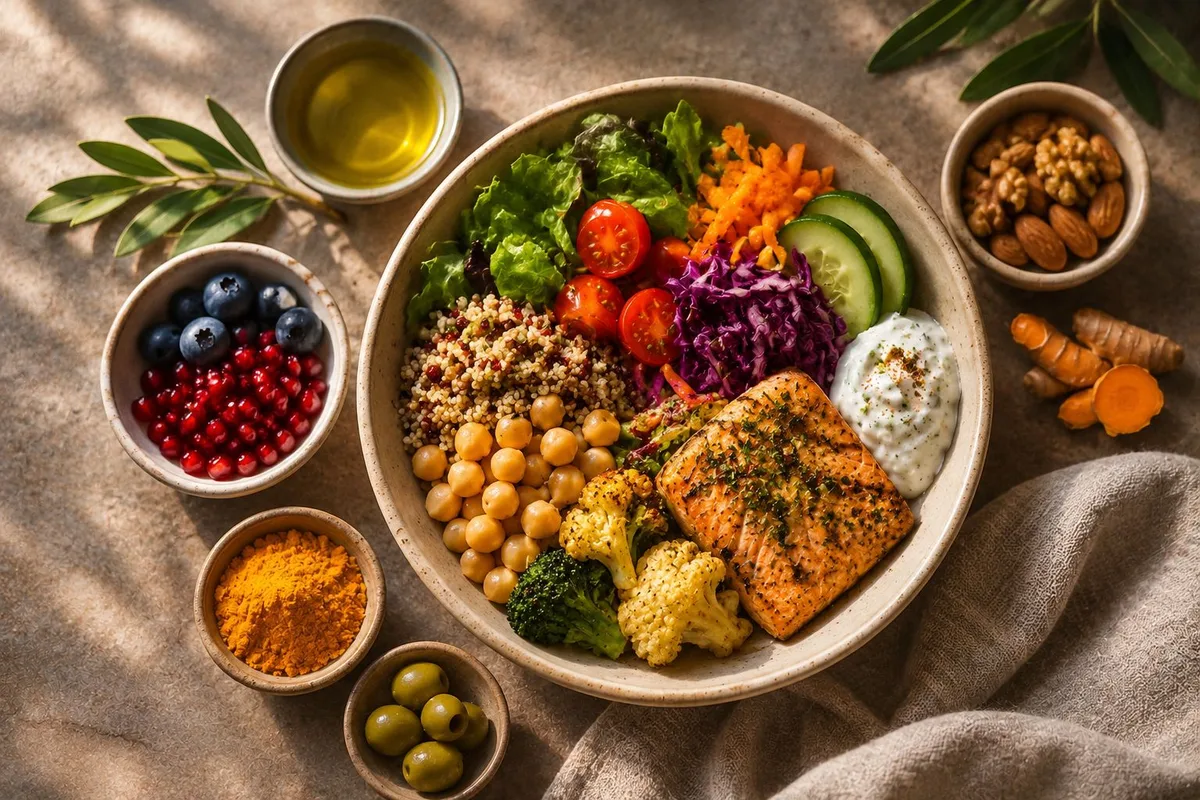
“Which foods are anti-inflammatory?” is one of the questions I’m asked most by people living with joint pain. The honest answer is that no single food switches inflammation off. But the overall pattern of what you eat does seem to matter, and the pattern with the most support is Mediterranean-style eating.
This isn’t about buying imported olive oil or giving up everything you enjoy. Our everyday kitchens already have most of what you need. Here is what the research says, and how to build the plate.
First, the honest bit
No diet cures arthritis, and “anti-inflammatory” is a label, not a guarantee. Food matters for your joints mainly in two ways: through body weight, which loads your knees and hips with every step, and through the overall quality of your diet, which is linked with inflammation in the body. Diet works best alongside strength exercise and, where needed, medical treatment.
What the research says
A systematic review of eating patterns in adults aged 45 and older found that Mediterranean-style and “prudent” diets, rich in vegetables, fruit, whole grains, fish and legumes (If you have gout, check with your doctor first, as both legumes and fish contain purines that can affect uric acid.), were linked with slower worsening of OA symptoms. A Western-style diet of processed foods, refined grains, sugary drinks and red and processed meat was linked with faster worsening, and higher fibre intake with less worsening of pain [1]. A larger umbrella review also found that most of the evidence favoured the Mediterranean pattern for pain, stiffness and inflammation, while evidence for individual fruits and herbs was little to none [2].
The evidence isn’t perfectly neat, though. A meta-analysis of randomised trials found that reduced-calorie diets were the most effective dietary strategy, and that the Mediterranean diet on its own didn’t show a statistically significant effect on pain when the trials were pooled [3]. In the IDEA trial, people with knee OA who lost weight through diet plus exercise had the best improvement in pain and function [4].
So, my honest summary: a mostly plant-based, minimally processed diet is sensible and well supported, and the clearest benefit comes from reaching a healthier weight. If your BMI is 25 or above (23 or above for people of South Asian descent), losing even 5-10% of your body weight can meaningfully improve blood pressure, blood sugar, and cholesterol. BMI is a rough guide, so talk to your doctor about what’s right for you.
Building your plate
Think in proportions rather than rules. A good everyday plate looks like this:
- Half the plate: vegetables. Leafy greens like palak and methi, gourds, cauliflower, carrots, beetroot, tomatoes, and a seasonal fruit every day.
- A quarter: whole grains. Whole wheat roti, millets like ragi, jowar and bajra, brown or red rice, oats.
- A quarter: protein. Dal, rajma, chana and sprouts, plus curd, paneer, eggs, fish or lean chicken, depending on what you eat.
- A little healthy fat. A small handful of nuts and seeds, and modest amounts of cooking oil. Olive oil is what the Mediterranean studies used, but the overall pattern matters more than the specific oil.
- Flavour from spices and herbs. Haldi, jeera, dhania, ginger, garlic, methi and pepper. Enjoy them for taste, not as medicine.
What to eat more of, and less of
Eat more often: dal, rajma, chana and other legumes daily (If you have gout, check with your doctor first, as legumes contain purines that can affect uric acid.); a wide variety of colourful vegetables and fruit; whole grains in place of refined ones; nuts and seeds; and fish like bangda (mackerel) or tarli (sardines) once or twice a week, if you’re non-vegetarian.
Cut back on: deep-fried snacks like samosa, pakora and bhajiya; sweets and sugary drinks, including packaged juices; maida-based foods such as white bread and biscuits; heavily processed packaged foods; and processed meats. This is the Western-style pattern linked with faster worsening of symptoms [1].
What a day could look like
This is an example, not a prescription. Portions matter, and your needs may differ.
- Breakfast: ragi porridge, or a vegetable besan chilla with curd.
- Mid-morning: a seasonal fruit and a few almonds or walnuts.
- Lunch: two whole wheat or jowar rotis, dal, a vegetable sabzi, a large salad and a bowl of curd.
- Evening: roasted chana, sprouts chaat or buttermilk.
- Dinner: grilled or curried fish (or paneer or an egg bhurji), vegetables, and a small portion of brown rice.
Watch the portions. Even healthy food adds weight in large amounts. Three helpings of a good sabzi is still three helpings.
A four-week way to start
Changing everything at once rarely lasts. Try one step a week:
- Week 1: fill half your plate with vegetables at lunch and dinner.
- Week 2: swap refined grains for whole grains and replace sugary drinks with water, buttermilk or unsweetened options.
- Week 3: add legumes or fish to at least four meals this week, and a small handful of nuts daily. (If you have gout, check with your doctor first, as both legumes and fish contain purines that can affect uric acid.)
- Week 4: cut back on deep-fried and packaged snacks, and cook more meals from scratch.
Mistakes I see families make
- Crash diets. They cause muscle loss, and muscle is what protects the joints.
- Cutting protein while trying to lose weight. Same reason.
- Relying on one “superfood” or anti-inflammatory powder to do the job.
- Buying expensive imported foods when local, seasonal ones do the same job.
- Skipping exercise because “diet is enough”. It isn’t. The two work best together.
When to see a doctor or dietitian
If you have diabetes, kidney disease or heart disease, or you’re on long-term medicines, talk to a doctor or a registered dietitian before starting any significant diet change. A few specific points: gout needs its own dietary advice, inflammatory arthritis such as rheumatoid arthritis needs medical management with diet as support, and if you take warfarin, keep your intake of green leafy vegetables steady and tell your doctor before changing it.
Quick answers
Do I need olive oil? It’s what the Mediterranean studies used, but it isn’t essential. Using modest amounts of the cooking oil you already have, and shifting the rest of your plate, matters more.
Should I take fish oil capsules? The 2019 American College of Rheumatology and Arthritis Foundation guideline recommends against routinely using fish oil to treat OA symptoms [5]. Eating fish as part of your plate is a separate matter and a good habit.
Is turmeric anti-inflammatory? Use haldi in your cooking by all means, but the evidence for individual spices and herbs is limited [2]. See our article on myth-busting knee nutrition for more.
How long before I notice a difference? Changes in weight and eating pattern take weeks to months, and the effect on pain is usually gradual rather than dramatic.
References
- The effects of dietary patterns and food groups on symptomatic osteoarthritis: a systematic review. Nutr Diet. 2023;80(1):21–43.
- Evidence-based dietary practices to improve osteoarthritis symptoms: an umbrella review. Nutrients. 2023;15(13):3050.
- Asadi S, Grafenauer S, Burley CV, et al. The effectiveness of dietary intervention in osteoarthritis management: a systematic review and meta-analysis of randomized clinical trials. Eur J Clin Nutr. 2025;79:959–971.
- Messier SP, et al. Effects of intensive diet and exercise on knee joint loads, inflammation, and clinical outcomes among overweight and obese adults with knee osteoarthritis: the IDEA randomized clinical trial. JAMA. 2013;310(12):1263–1273.
- Kolasinski SL, et al. 2019 ACR/Arthritis Foundation guideline for the management of osteoarthritis of the hand, hip, and knee. Arthritis Rheumatol. 2020;72(2):220–233.
This article is for general education and does not replace advice from a qualified doctor, physiotherapist or dietitian.